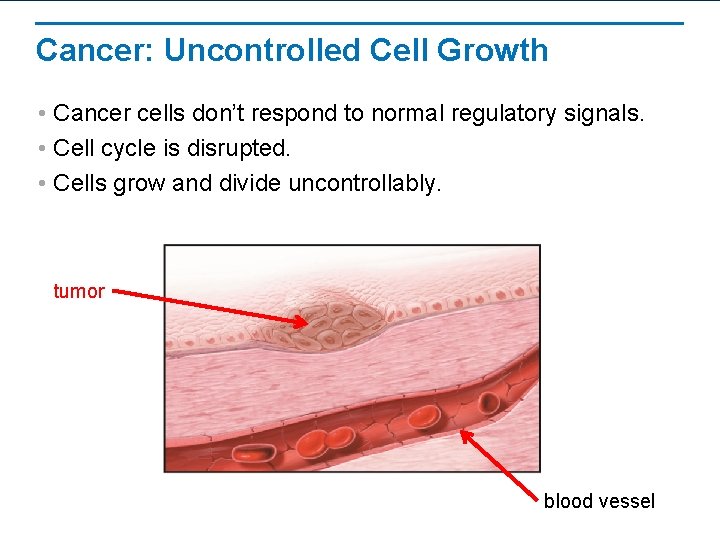
cancer is a result of a disruption in the normal cell cycle normal Biology Diagrams Cell cycle deregulation associated with cancer occurs through mutation of proteins important at different levels of the cell cycle. In cancer, mutations have been observed in genes (CDK1) by indirubin derivatives in human tumour cells. Br. J. Cancer 84, 283. [PMC free article] [Google Scholar] McDonald ER III, El Deiry WS (2000) Cell cycle Cancer is a systemic manifestation of aberrant cell cycle activity and dysregulated cell growth. Genetic mutations can determine tumor onset by either augmenting cell division rates or restraining normal controls such as cell cycle arrest or apoptosis. As a result, tumor cells not only undergo uncontrolled cell division but also become compromised in their ability to exit the cell cycle Cancer comprises many different diseases caused by a common mechanism: uncontrolled cell growth. Despite the redundancy and overlapping levels of cell cycle control, errors do occur. One of the critical processes monitored by the cell cycle checkpoint surveillance mechanism is the proper replication of DNA during the S phase.
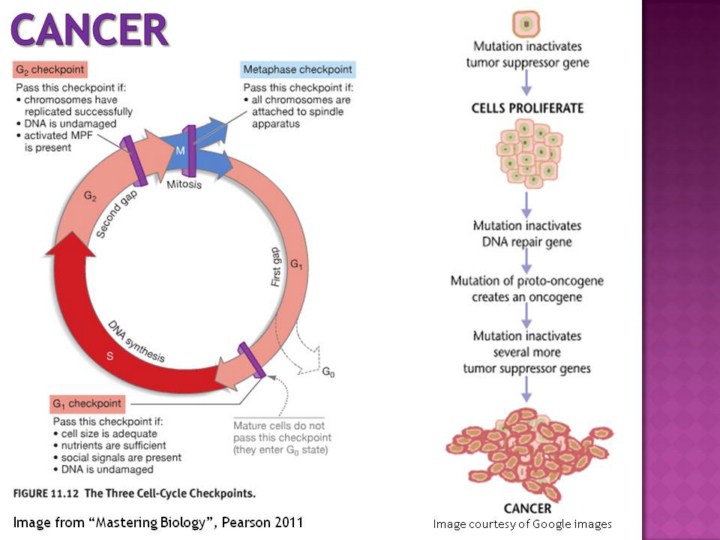
Most cells in the body go through a cycle of life in which their genetic information is retained, fixed, and passed down to daughter cells through a highly coordinated and regulated process. However, during this cell cycle, there are many situations where mistakes are made by the cycle or by a regulating system that causes the cell to proliferate uncontrollably, leading to cancer. Somatic

Cancer and the Cell Cycle Biology Diagrams
Cancer is a group of diseases in which cells divide continuously and excessively. Cell division is tightly regulated by multiple evolutionarily conserved cell cycle control mechanisms, to ensure This review compares the cell cycle in normal cells to that in cancer cells, with a focus on the regulatory proteins involved, and the role of deficiencies in these proteins in the development of cancer. The Cell Cycle in Normal Cells. The cell cycle comprises of interphase, which consists of the G 1, S, and G 2 phases, and the mitotic (M
The fundamental abnormality resulting in the development of cancer is the continual unregulated proliferation of cancer cells. Rather than responding appropriately to the signals that control normal cell behavior, cancer cells grow and divide in an uncontrolled manner, invading normal tissues and organs and eventually spreading throughout the body. Introduction. The majority of cells in the human body are not cycling and instead reside in 'out-of-cycle' states. A minority of cells are actively cycling (proliferating) and these are located mainly in the stem-transit amplifying compartments of self-renewing tissues, such as epithelia and bone marrow 1.In contrast, most functional cells have irreversibly withdrawn from the cell division