Stem Cell Research Harnessing the Power of Cellular Regeneration Biology Diagrams Stem cell therapy, also known as regenerative medicine, promotes the repair response of diseased, dysfunctional or injured tissue using stem cells or their derivatives. It is the next chapter in organ transplantation and uses cells instead of donor organs, which are limited in supply. The regeneration of injured tissues by exogenous and endogenous stem cells relies on the local microenvironment being conducive to repair. Chronic diseases confer tissue and organ damage that Regenerative medicine aims at repairing, replacing or regenerating cells, tissues and organs to restore impaired function 9.New insights in developmental biology, stem cell biology and
In contrast to epidermal stem cells, which continually regenerate tissue, hair follicle stem cells (HFSCs) alternate between extended bouts of quiescence and active tissue regeneration (Figure 1B). In mice, much of the regeneration energy in the absence of injury is devoted to synchronous cycles of hair coat production, which is fueled by stem

Tissue Stem Cells: Architects of Their Niches Biology Diagrams
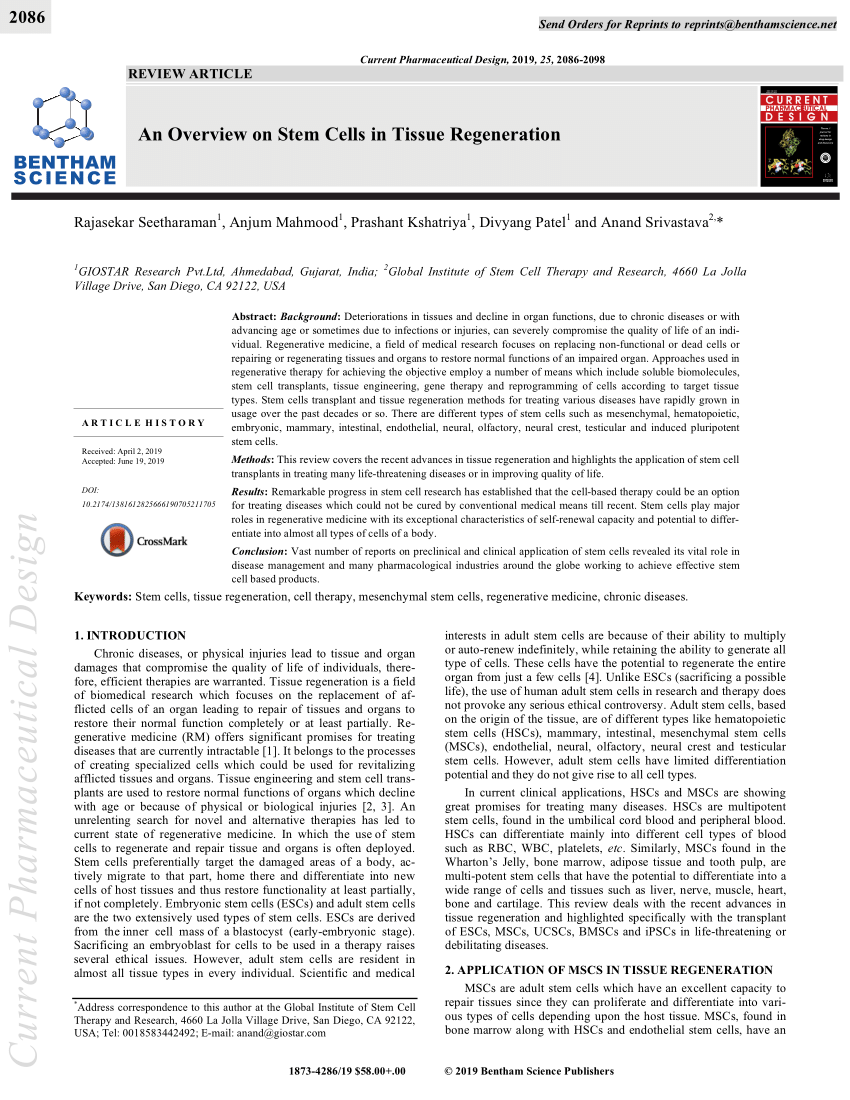
The field of tissue repair and wound healing has blossomed in the last 30 years. We have gone from recombinant growth factors, to living tissue engineering constructs, to stem cells. The task now is to pursue true regeneration, thus achieving full Stem cells transplant and tissue regeneration methods for treating various diseases have rapidly grown in usage over the past decades or so. There are different types of stem cells such as mesenchymal, hematopoietic, embryonic, mammary, intestinal, endothelial, neural, olfactory, neural crest, testicular and induced pluripotent stem cells.
Keywords: Mesenchymal stem cell, micrografts, tissue regeneration, autologous, wound management, ulcer. Introduction. The correct histological structure of a given tissue plays a pivotal role in allowing appropriate function and optimizing the activities to which that tissue is predisposed. Unfortunately, many factors can alter the physiology In some cases, stem cells do not appear to be taking center stage in the repair and regeneration of tissue but are key players nonetheless. In the kidney, it was found that when the tubules used for drawing off waste fluids from the blood are damaged, it is the mature epithelial cells, not stem cells, which step in to rebuild the tissue.
